
Choosing a wedding venue is one of the decisions that shapes almost everything that follows. The space affects your guest experience, budget, supplier logistics, décor possibilities, schedule and, in some cases, how your ceremony and reception flow together.
It is easy to fall in love with a beautiful space before asking whether it actually works for the celebration you want to create. Use the questions below to compare venues on both how they look and how they function. If you are balancing several venue, supplier and logistics decisions, planning support can help bring those conversations together.
1. Start with the budget
Know the range you are comfortable working within before you visit too many venues. Ask exactly what the quoted venue fee includes and what will cost extra.
Clarify whether tables, chairs, lighting, catering areas, décor items, security, cleaning or other facilities are included. Also ask whether rates differ by day, season or type of event.
The cheapest venue is not always the least expensive option overall. A space that requires extensive rentals, installation or transformation may cost more once everything needed for the event is added.
2. Check the size and capacity
Your venue needs to work for the number of people you actually expect—not simply the number stated on a venue brochure.
Think about the full event layout: guest seating, dining tables, ceremony space, dance floor, entertainment, catering areas, service access and room for suppliers to work. Ask how the venue’s stated capacity changes depending on the layout you want.
Your guest count is an important part of this decision, so our guide to planning your wedding guest list can help you think through the numbers early.
3. Consider location and accessibility
Think about how guests will get to the venue and how the location affects the overall schedule.
Consider travel time, traffic, parking, accessibility and the distance between the ceremony and reception. If guests are travelling from different places, accommodation and transport may also become part of the planning conversation.
A venue that can accommodate both ceremony and reception can simplify movement for guests, suppliers and the wedding party, but it is not the only workable option.
4. Ask about changing rooms and private spaces
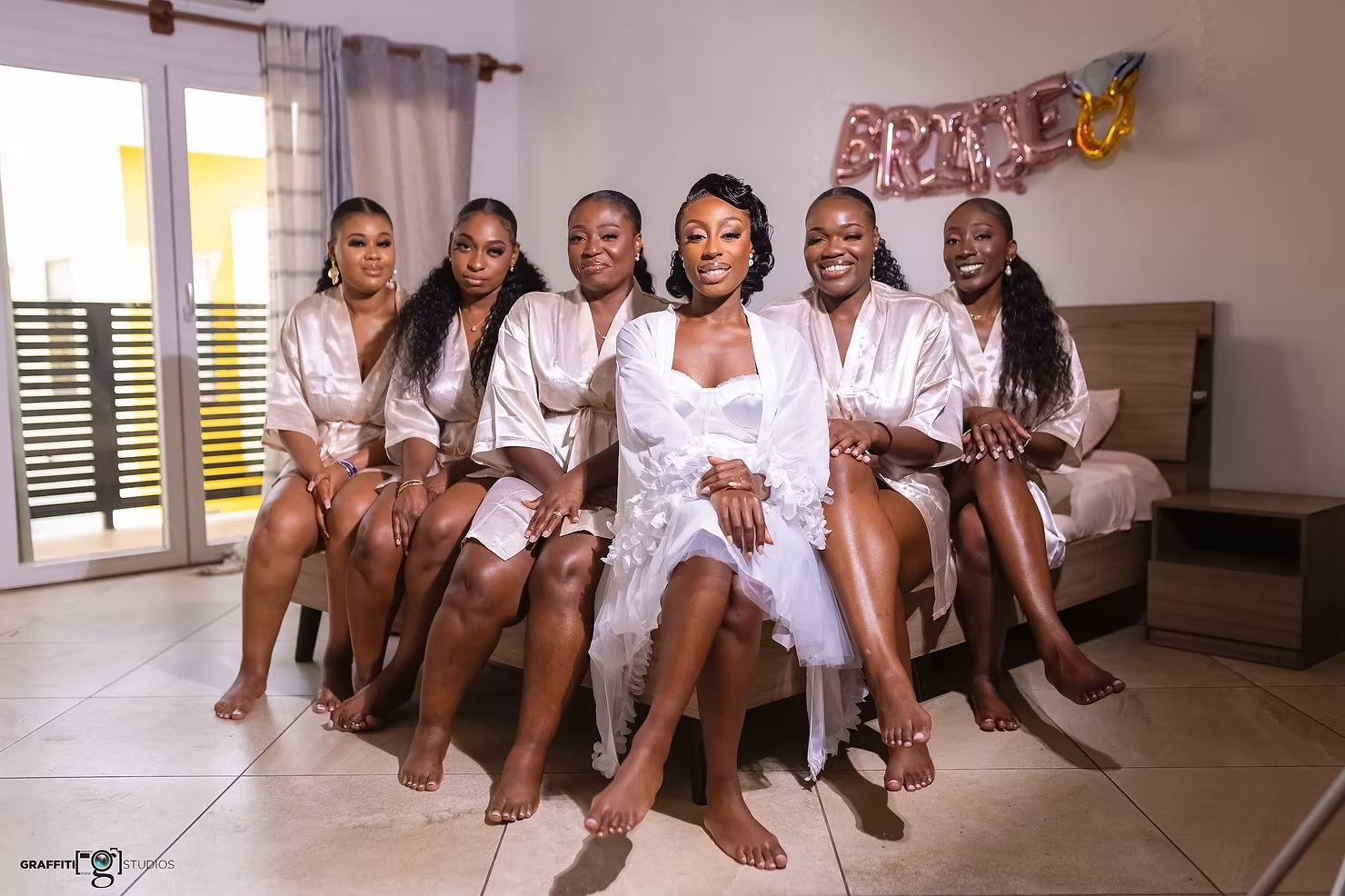
Find out whether there is a suitable space for the couple or wedding party to change, prepare or take a short break during the event.
Ask where personal belongings can be kept, whether the space is private and when it will be available. These details can make a significant difference on a long event day.
5. Understand the venue’s coordination and supplier rules
Ask whether the venue has an on-site coordinator and exactly what that person is responsible for.
Also find out whether the venue has preferred suppliers, restrictions on outside vendors, delivery procedures, setup and teardown windows, or rules about décor and installations. These policies can affect your planning long after you have signed the venue agreement.
If you are bringing in an independent planner, stylist or production team, make sure everyone understands the venue’s requirements early.
6. Look at parking, security and guest movement
Ask about parking capacity, access points and security arrangements. If guests will be arriving at different times, consider how easily they can find the venue and move from parking or drop-off areas into the event space.
For larger celebrations, also consider how suppliers will load in equipment without disrupting guests. Good event logistics are often invisible when they work well—and very noticeable when they do not.
7. Inspect the facilities
Do not rely only on photographs. Walk through the restrooms, preparation areas, guest spaces and other facilities that matter to your event.
Check whether they are clean, accessible and appropriate for the number of guests you expect. Ask what happens if additional facilities or equipment are needed.
8. Assess how much work the space needs
A venue can look impressive in photographs and still require substantial work to achieve your desired event design.
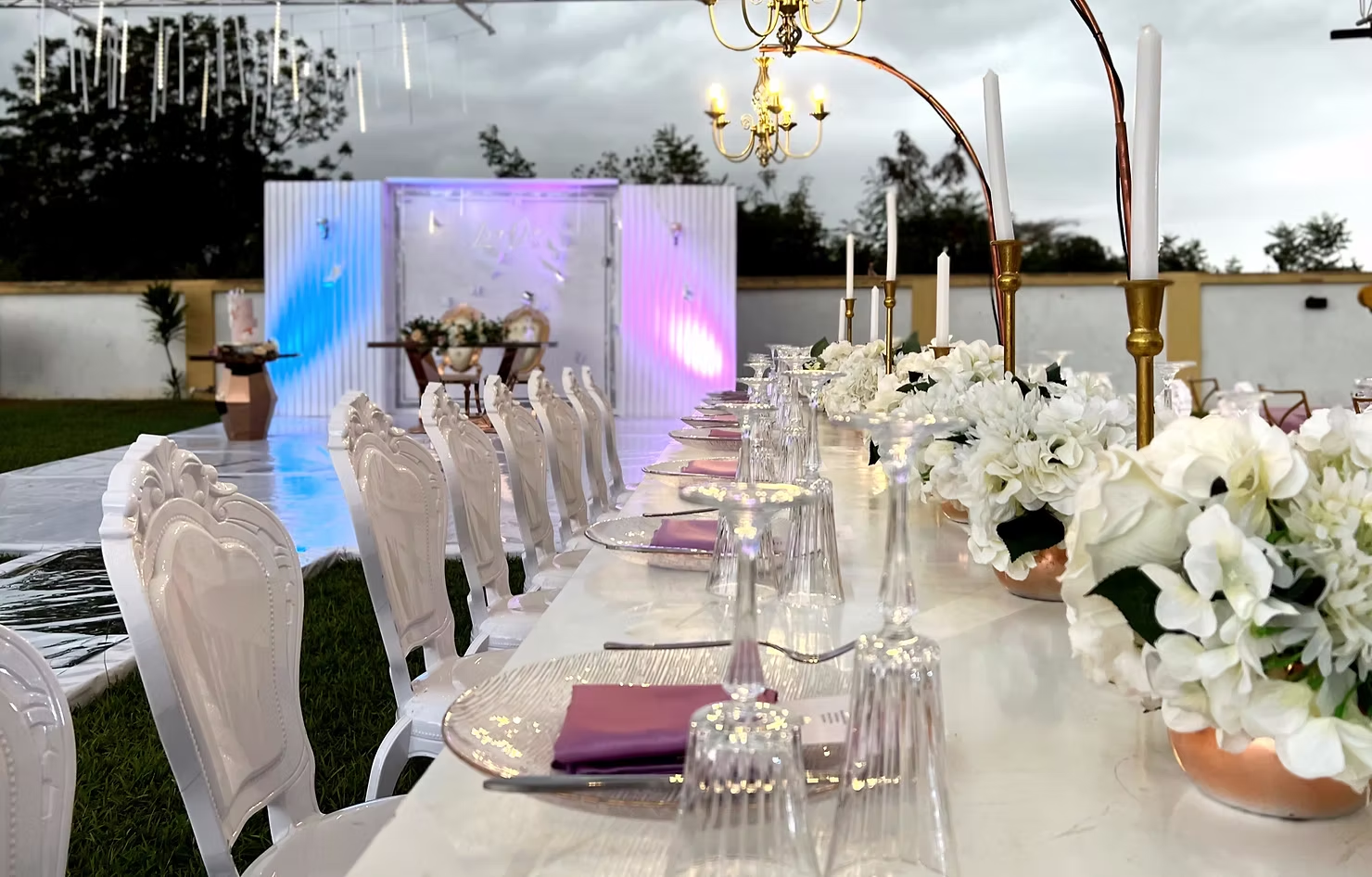
Look at the existing floors, walls, ceilings, lighting, furniture and architectural features. Ask yourself what you would keep, what you would cover or transform, and what would need to be brought in.
A venue with strong existing character can reduce the amount of décor required, while a blank canvas may offer greater creative flexibility. Neither is automatically better—the right choice depends on the experience you want to create.
9. Think about indoor and outdoor options
If you are considering an outdoor celebration, ask how the venue works in different weather conditions and what contingency options are available.
Look at shade, rain protection, guest comfort, sound, lighting, power, catering and access for suppliers. A venue does not necessarily need a permanent indoor reception space, but you should understand the backup plan before committing.
Our guide to planning an outdoor wedding covers additional practical considerations.
10. Ask about backup power and essential infrastructure
If your event depends on electricity for lighting, sound, catering, cooling, entertainment or other equipment, ask what happens if the main supply is interrupted.
Understand what backup power is available, what areas it supports and whether the venue or your suppliers are responsible for additional equipment. The same principle applies to other essential infrastructure: ask before assuming it will be available on the day.
Before you make the final decision
Try to compare two or three realistic options rather than choosing a venue based on appearance alone. For each one, compare the total cost, guest experience, practical restrictions, design potential and supplier logistics.
It can also help to visit with the people who will be involved in the decision, such as your partner, planner or key family members. A second perspective can reveal practical questions that are easy to miss during an exciting first visit.
The right wedding venue is not simply the one that looks beautiful. It is the one that gives you a strong foundation for the celebration you want to create.