
Congratulations on your engagement. One of the easiest ways to make wedding planning feel more manageable is to give major decisions a place on the calendar.
There is no single timeline that works for every wedding. Your celebration may be smaller or larger, local or destination-based, simple or highly produced. Cultural traditions, venue availability, guest travel and supplier lead times can also change the order of decisions.
Use this as a flexible framework rather than a set of rules. The goal is to know what needs attention next, what can wait and who needs to be involved. If the number of moving parts is becoming difficult to coordinate, planning support can help.
12+ months before: establish the foundation
Start with the decisions that influence everything else.
- Discuss the type of celebration you want and what matters most to you.
- Set an initial budget and agree how major costs will be approached.
- Create a first version of the guest list.
- Consider possible dates and locations.
- Research venues and understand what is included in their fees.
- Decide whether you want a planner, coordinator or to manage the planning yourselves.
Your guest count and budget will influence the venue, catering and overall scale of the event. Our guide to choosing the right wedding venue can help you frame those early venue conversations.
9–12 months before: secure the key decisions
Once the overall direction is clear, start securing the decisions that determine the rest of the plan.
- Confirm the venue and date.
- Refine the guest list and budget.
- Begin conversations with key suppliers.
- Establish an overall design direction.
- Consider photography, entertainment, catering and other major suppliers.
- Start thinking about attire and any requirements that need longer lead times.
Keep written records of quotes, decisions, deposits and important dates. A clear record becomes increasingly valuable as the number of suppliers grows.
6–9 months before: develop the experience
With the main foundations in place, start developing the details your guests will actually experience.
- Refine the event design, colour direction and décor approach.
- Review catering and menu requirements.
- Develop stationery and invitation plans.
- Confirm attire decisions and fitting schedules.
- Review ceremony and reception flow.
- Consider guest accommodation, transport or travel information where relevant.
- Revisit the budget as new decisions are made.
This is also a useful point to identify dependencies. For example, décor choices may depend on the venue’s restrictions, while the seating plan depends on the guest list becoming more settled.
4–6 months before: plan the guest journey
Begin turning the overall concept into a more detailed event plan.
- Finalise invitation wording and key guest information.
- Review ceremony and reception layouts.
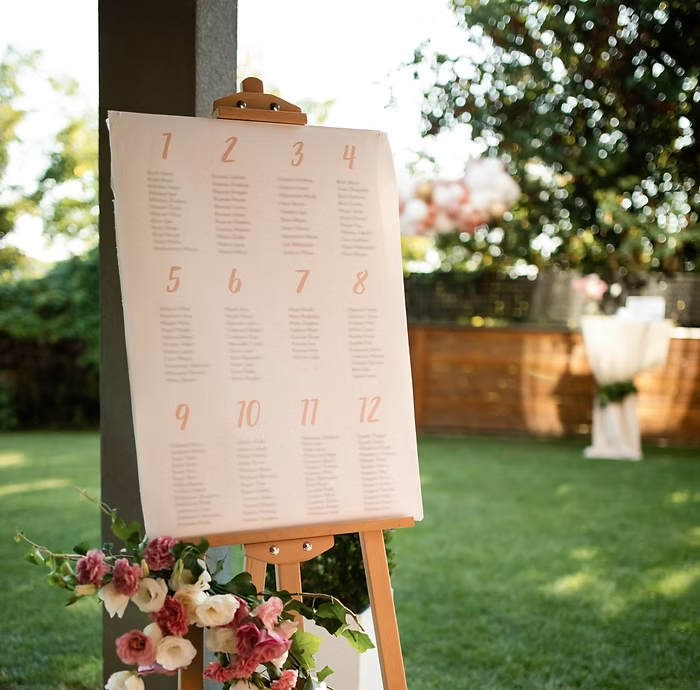
- Develop the seating approach.
- Confirm major décor and styling requirements.
- Coordinate supplier responsibilities.
- Review accommodation, transport and accessibility considerations.
- Identify any special requirements for guests, family members or the wedding party.
The aim is not to have every detail finished. It is to make sure important decisions are moving in the right direction and that suppliers have the information they need.
2–3 months before: bring the plan together
The event should now start moving from ideas into coordinated execution.
- Track invitation responses and update the guest list.
- Review the budget against confirmed commitments.
- Confirm supplier deliverables and outstanding decisions.
- Review décor, stationery and other design details.
- Continue attire fittings and preparation tasks.
- Start developing the wedding-day schedule.
- Identify anything that could create a last-minute problem.
This is a good time to make sure responsibilities are clear. A supplier should know what they are responsible for, when they need access and who they should contact if something changes.
4–8 weeks before: confirm and communicate
Move from planning assumptions to confirmed details.
- Finalise guest numbers as far as practical.
- Begin finalising seating arrangements.
- Confirm arrival, delivery and setup requirements with suppliers.
- Confirm venue access and event timings.
- Share the information people need to do their jobs well.
- Review contingency plans for weather, transport, power or other event-specific risks.
- Confirm outstanding payments and contractual requirements.
Your working schedule should now be detailed enough for the people responsible for delivery to understand how the day will flow.
Final week: protect the calm
The final week is not the time to redesign the entire event. Focus on confirmation, communication and readiness.
Review:
- final guest numbers and seating;
- supplier contact details;
- delivery and setup times;
- venue access arrangements;
- ceremony and reception schedules;
- important personal items;
- payment or documentation requirements; and
- contingency arrangements.
Give key people a clear point of contact so that the couple does not become the default person for every question on the day.
Wedding day: be present
A well-planned wedding should allow the couple to experience the celebration rather than spend the day managing it.
Make sure the final schedule, supplier contacts, responsibilities and important decisions have been handed over to the people coordinating the event. When everyone understands what they are responsible for, small changes can be handled without pulling the couple into every operational detail.
The timeline is ultimately a tool—not the event itself. Leave enough flexibility for real life, unexpected moments and the reason everyone is there in the first place: to celebrate.